
Patriot Docks kit guide
How to Anchor a Floating Dock Kit
What a Patriot floating kit ships with, the two anchoring systems that suit Texas tanks, ponds and lakes, and where the pipes or chains go on your layout.
By Shoreline ProductsUpdated 7 min readChecked against Patriot Docks Floating Dock Assembly Instructions, 2026 edition
The short answer
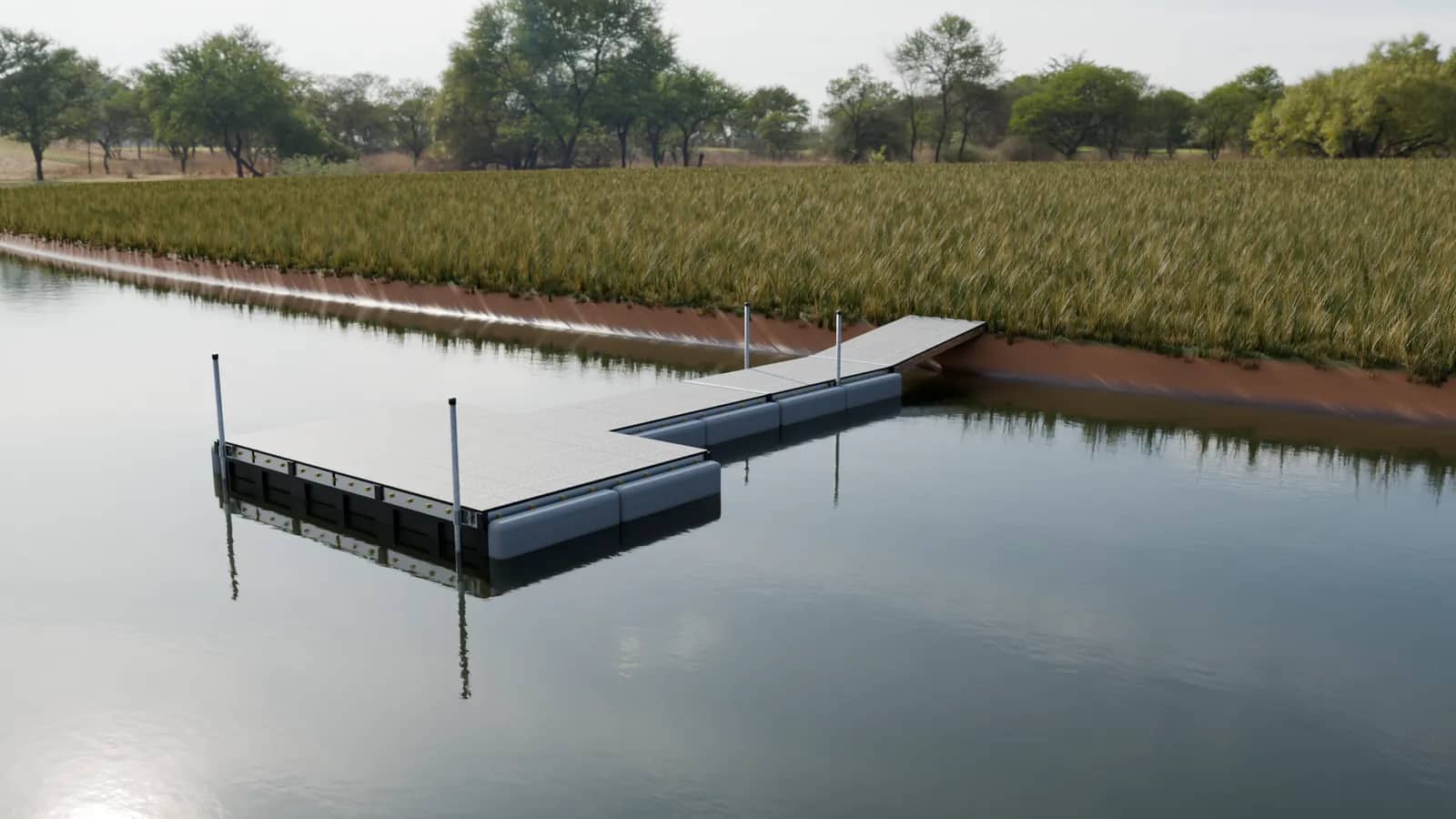
A floating dock is anchored so it can't drift or swing but can still rise and fall with the water. Patriot floating kits come with four piling sleeves, short steel collars that bolt to the frame, and no anchors, so you add one of two systems. In water under about 4 ft, set 1-1/2 in galvanized pipe at least 12 in into firm bottom, and the sleeves slide up and down it. In deeper water, run 5/16 in galvanized chain from the sleeves to concrete weights on the bottom. Use at least four anchor points, starting with a pair near the shore end and a pair at the far end, and size everything for both your lowest and highest water.
- 4piling sleeves in every Patriot floating kit
- Under 4 ftof water at the far end, at low water: pipe and sleeve
- 12 in+pipe into firm bottom
- 4+anchor points: a pair near shore, a pair far out
What comes in the box, and what do you add?
Every Patriot floating kit includes four galvanized piling sleeves: short steel collars that bolt to the frame and either slide on an anchor pipe or hold a chain. The anchoring itself is bought for your water.
| Pipe and sleeve | Chain and weights |
|---|---|
| 1-1/2 in Schedule 40 galvanized pipe, one length per sleeve | 5/16 in galvanized chain, at least twice your water depth per line, and long enough to reach its weight with slack |
| An auger tip for each pipe, or a rented post driver | Galvanized shackles (screw-pin links) at both ends of each line |
| A vinyl cap for the top of each pipe | Concrete weights, each with a loop to shackle to |
Which anchoring fits your water?
It comes down to how deep the water is at the dock's far end at low water, how far the level moves, what the bottom is made of, and your shoreline.
| Your water | Use |
|---|---|
| Under about 4 ft at low water, with mud, clay or sand | Pipe and sleeve, set 12 in or more into firm bottom |
| Under about 4 ft, too firm for an auger | Pipe and sleeve, driven with a post driver |
| About 4 ft or deeper | Chain and concrete weights |
| Rock or caliche | Chain and concrete weights |
| A level that swings more than a few feet | Ask us: pipes get long, and chains need extra slack |
| Shallow, steady, with a firm bottom | A stationary kit, with nothing to anchor |
Patriot's instructions generally prefer pipe and sleeve up to about 4 ft deep, and call chain and weights a good all-round method, especially in deeper water. A mix of both also works.
Patriot's anchoring instructions
Anchoring is covered under Anchoring Systems and Dock Installation, with a drawing of each system.
How does pipe and sleeve anchoring work?
The pipe stands still and the dock slides up and down it on the sleeves. In water under about 4 ft, it's the simpler of the two systems.
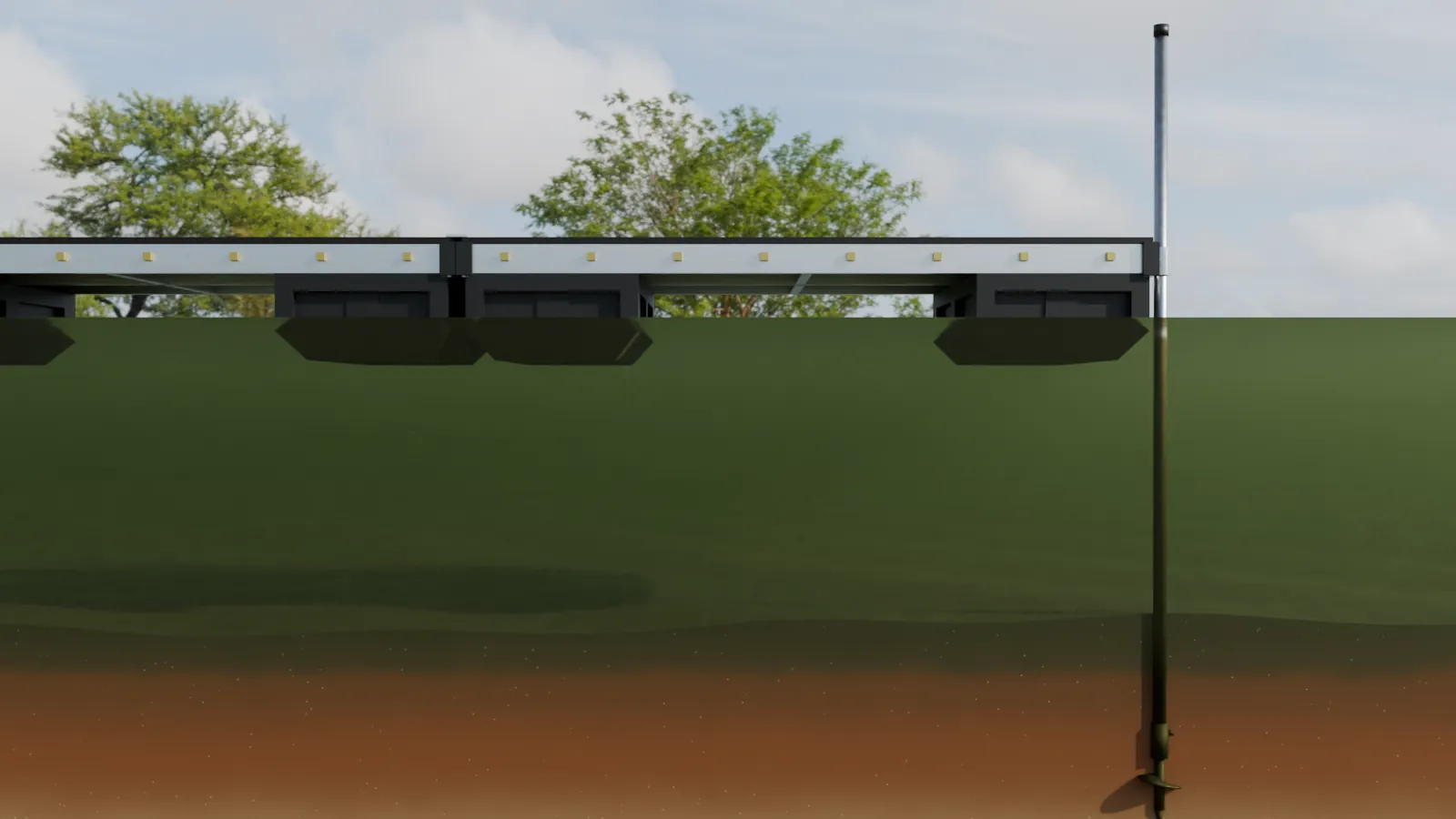
- Piling sleeve, bolted to the end of the frame (4 come with the kit)
- 1-1/2 in Schedule 40 galvanized pipe; the sleeve slides on it as the water moves
- Float; the deck rides about 12 in above the water
- Lake bottom, about 3-1/2 ft down
- Auger end, set at least 12 in into the bottom
Float the dock into place
Hold it with temporary lines first. Our install guide covers that step.
Get the right pipe
Patriot's manual calls for 1-1/2 in Schedule 40 galvanized pipe, about 1-7/8 in across the outside, and Patriot's own dock posts and augers are that size. Its anchoring article mentions 2 in pipe, so if you buy pipe locally, take one sleeve along and slide it on first. Skip chain-link fence post: it's about the same size but thin-walled.
Set it 12 in or more into firm bottom
Push a rod down to find where the bottom turns firm, and count the 12 in from there. Twist the pipe in on an auger tip, or cap it and drive it with a rented post driver. Go deeper if a boat will tie up. Set the shore pair standing in shallow water and the far pair from the decked dock or a boat, never from bare frame rails or deep water.
Set it plumb and check the slide
Check each pipe with a level on two sides so it stands straight. A leaning pipe can make the sleeve catch when the water drops. If your sleeves have set screws, leave them loose.
Pipe length: add the depth at the post at low water, how far the water can rise, about a foot for the deck, at least 12 in into firm bottom plus any soft mud above it, and a foot or more above the deck at high water. In 3-1/2 ft of water that can rise 2 ft, that's a 9 to 10 ft pipe.
How do chain and weights work in deeper water?
In about 4 ft of water or more, chain the dock to concrete weights on the bottom. Slack in the chain lets the dock ride the water.
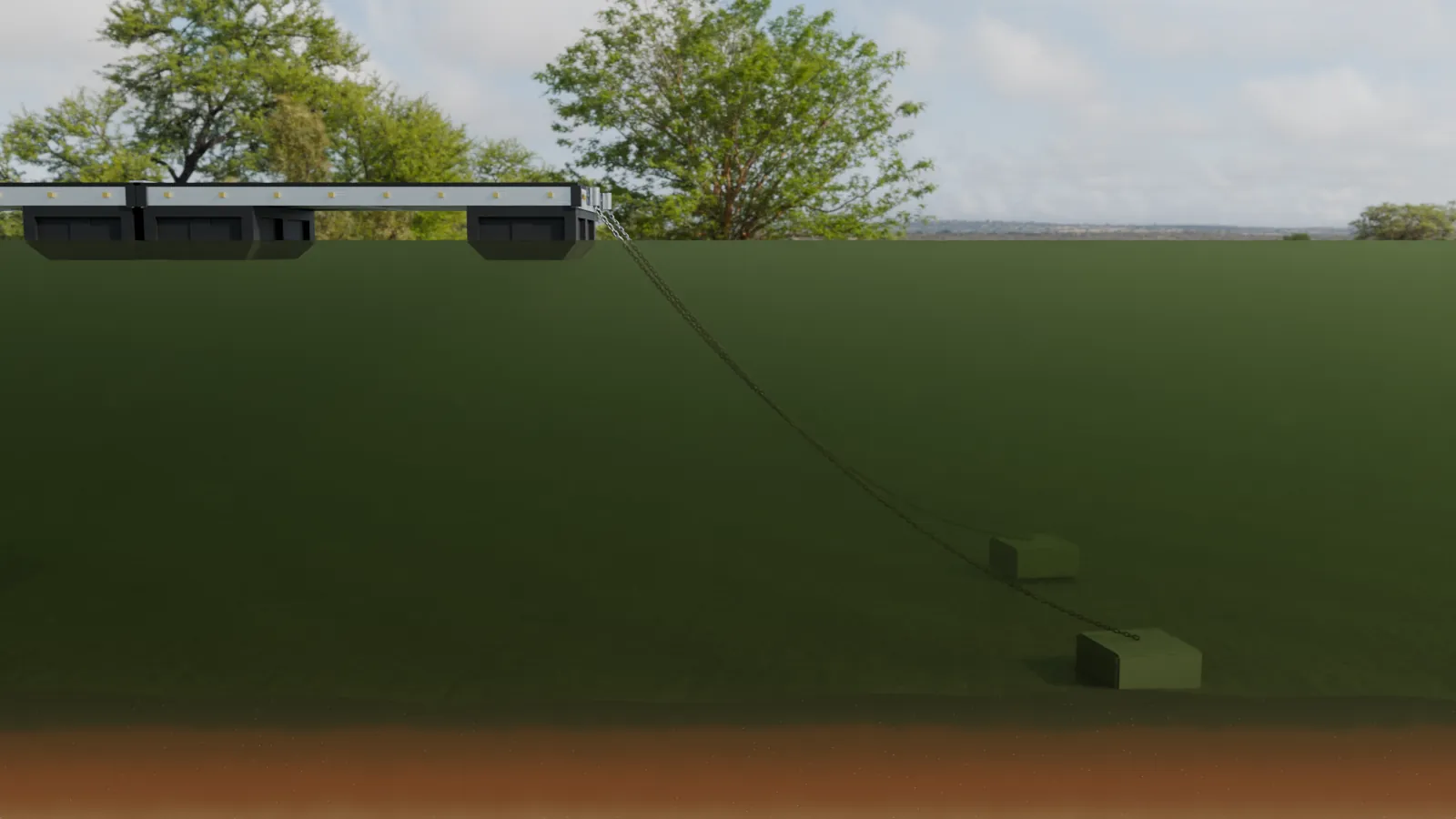
- Chains shackled at the piling sleeves
- 5/16 in galvanized chain, at least twice the water depth
- Concrete weight about 10 ft out from the dock
- Lake bottom, about 8 ft down
- Weight: Patriot calls for 500 to 1,500 lb of anchor weight, depending on the dock's size and your water. It doesn't say whether that's each weight or the whole dock, so ask us before you buy.
- Chain: 5/16 in galvanized, with galvanized shackles at each end. Patriot says each line should be at least twice the water depth. Crossed under the dock to weights 10 ft out, that's usually too short: measure across the surface from the sleeve to the weight's spot, add your high-water depth, and use whichever is longer.
- Placement: weights about 10 ft out, with the lines crossed under the dock, as Patriot's anchoring guide suggests.
- Points: at least four, a pair near the shore end and a pair at the far end. For chain, Patriot wants anchors no more than 32 ft apart along the dock.
Patriot also suggests chain at the weight end and rope or cable near the dock, to save cost and wear.
Use solid concrete weights with a galvanized loop cast in, not cinder blocks. If you can, set them when the water is down. From a boat, take one at a time and stay well inside what the boat can carry.
Where do the anchor points go on your kit?
Secure the shore end first, then the parts that move most, with the anchors spread wide.
Patriot says to anchor where the dock moves most, and to weigh how well the ramp is fixed to the shore. A ramp that only rests on the bank doesn't hold the dock, so a typical start with the four sleeves in the box is one pair on the first floating section near the bank and one pair at the far end, or at the far outer corners of a platform, mounted on the 4 ft end rail. If the ramp is fixed to the shore with an extra hinge kit or a rigid mount (not included), all four can go farther out.
Wide platforms catch more wind, so add sleeves (sold separately) at their other outer corners. Longer docks need more points: Patriot's design guide puts a 16 ft dock at about four anchors and a 48 ft dock at eight or more, so for a kit of 40 ft or more, ask us how many extra sleeves to add. For chain, Patriot wants anchors no more than 32 ft apart along the dock, and we use the same spacing for pipes.
How do you plan for Texas water levels?
Anchoring has to work at your lowest and your highest water.
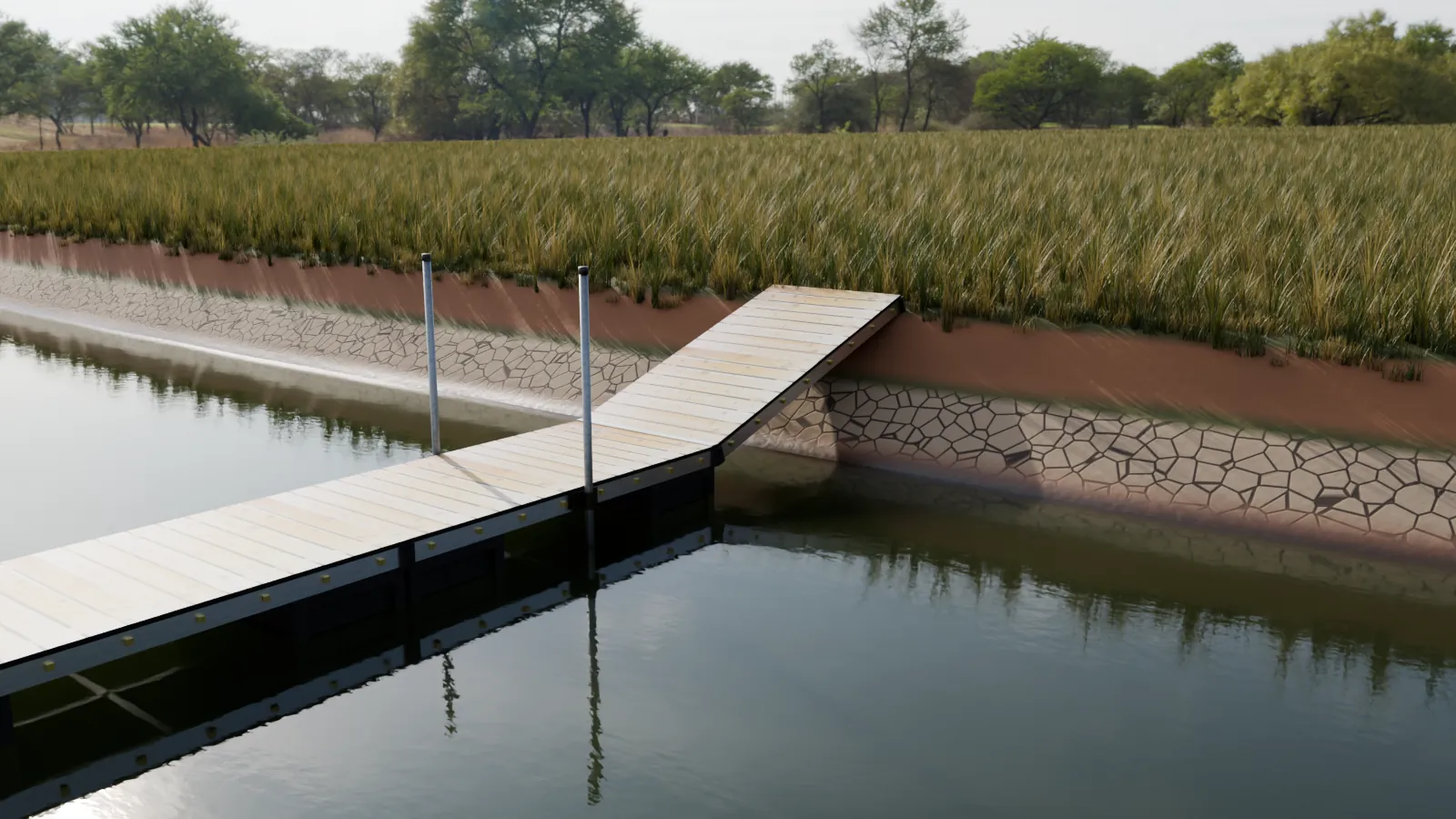
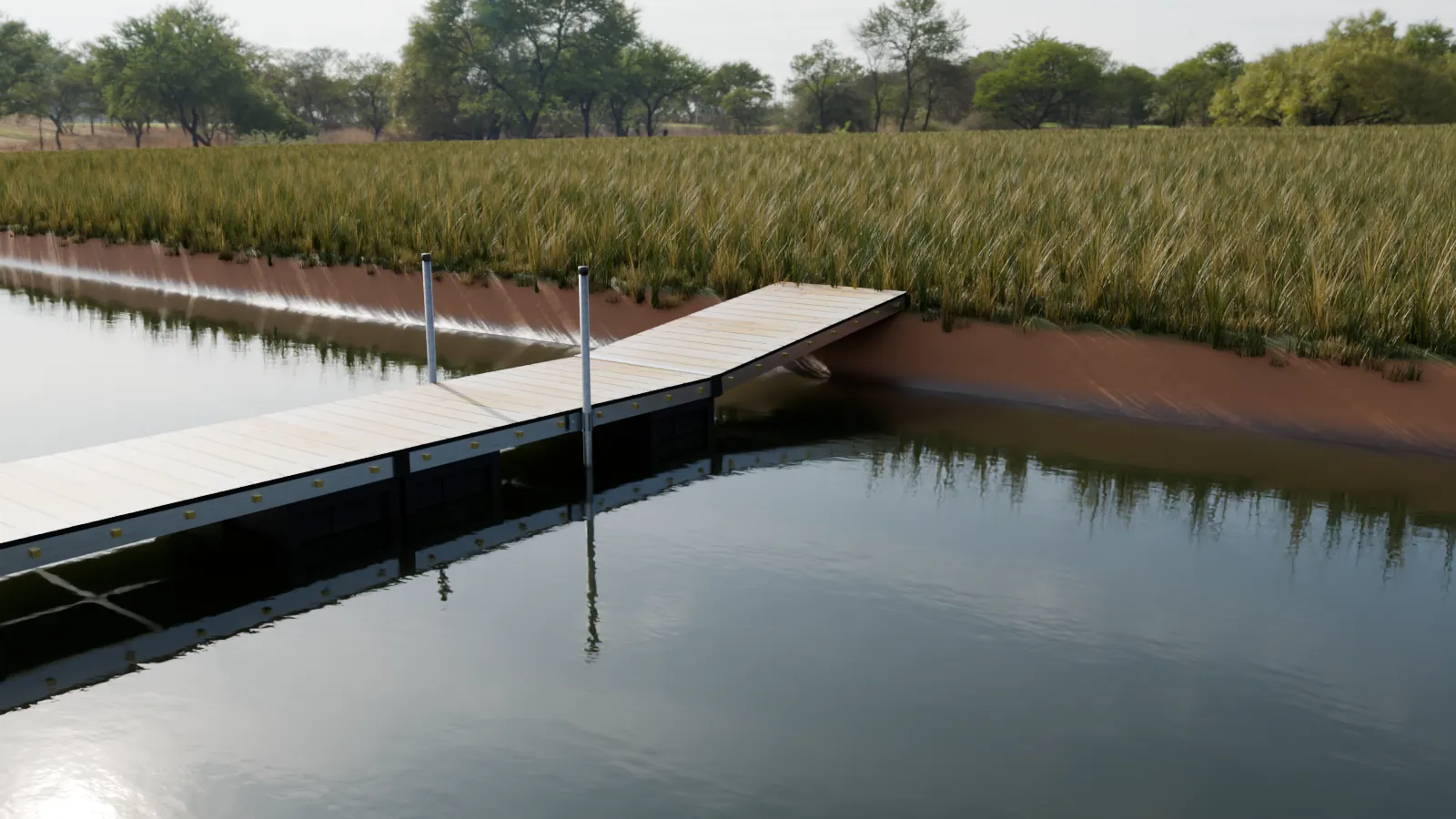
- Low water: the far end must still float and the ramp must still be safe to walk.
- High water: pipes need a foot or more above the deck, or the sleeves can ride off the top. Chains need slack.
- Floods: Patriot says to take a floating dock out when flooding is expected, and in a severe storm to remove it or at least the decking. A backup line from the dock to a tree on the bank can keep it from drifting off if the water tops the pipes.
- After a big swing: check that every sleeve still slides on a straight pipe, every chain still has slack, the ramp is still safe to walk, and the first section isn't riding low.
For the major reservoirs, the Texas Water Development Board's Water Data for Texas shows how far each lake has dropped before.
When is a stationary dock the better choice?
When your water is shallow, under about 6 to 8 ft at the end, steady, and firm on the bottom. A stationary kit stands on its own legs.
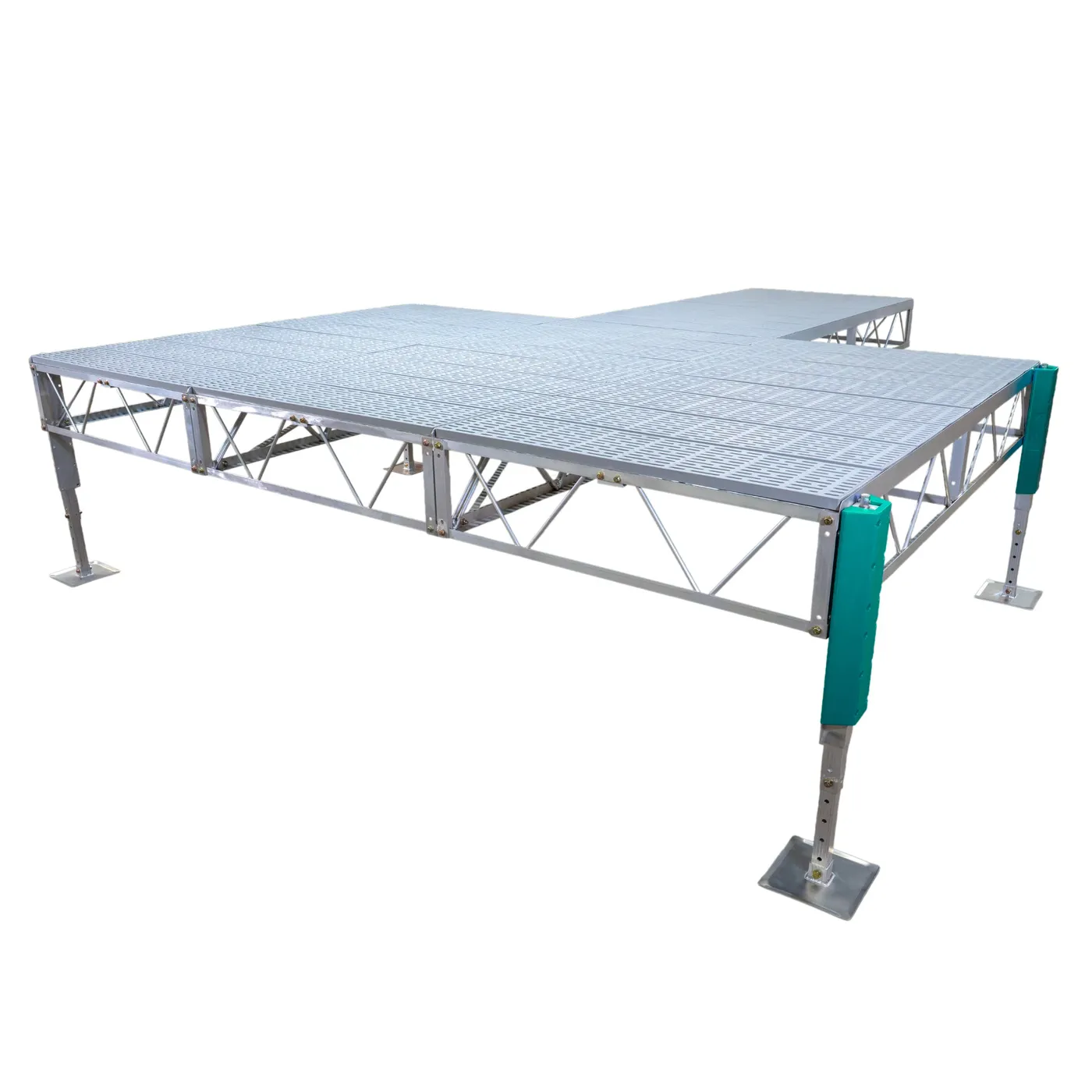
A jack dock levels from the deck with a cordless drill; a pipe dock levels by loosening the locking bolts on each leg and sliding it. In steady water there's nothing to anchor; in moving water, Patriot says they need anchoring too. See the stationary kits.
What about EZ Dock kits?
They come with their own anchoring.
Each of our EZ Dock kits ships with four 20 ft anchor pipes. EZ Dock's manual says each pipe goes at least 3 ft into the bottom, normally until it meets full resistance or at least a third of the water depth. We sell these kits; ask us about setting the pipes. See the EZ Dock kits.
EZ Dock's instructions
Quick answers
Do Patriot floating docks come with anchors?
No. Each floating kit includes four piling sleeves. The pipe, augers, chain or weights are bought separately, because the right anchoring depends on your water.
Where should the anchors go on a floating dock?
Start with a pair near the shore end and a pair at the far end, or at a platform's far corners. Patriot says to anchor where the dock moves most and to consider how well the ramp is fixed to the shore.
How deep should anchor pipes go into the bottom?
At least 12 in into firm bottom, per Patriot's instructions, and deeper if a boat will be tied to the dock. Patriot's product chart marks 12 in or more.
How much weight does it take to anchor a floating dock?
Patriot's instructions call for 500 to 1,500 lb of anchor weight, depending on the dock's size and water conditions, on 5/16 in galvanized chain at least twice the water depth. They don't say whether that's each weight or the whole dock, so ask us before you buy concrete.
Will an anchored floating dock handle changing water levels?
Yes. Sleeves slide on the pipe and chains carry slack, so the dock rises and falls in place. Size the pipe and chain for your highest and lowest water.
Sources
- Patriot Docks, Floating Dock Assembly Instructions (2026)
- Patriot Docks, How to Anchor a Floating Dock (May 2026)
- Patriot Docks, Floating Dock Design: How to Plan the Right Size and Layout (Sep 2026)
- Patriot Docks, T-Shaped Low-Profile Floating Dock package (what's included)
- Patriot Docks product FAQ
- EZ Dock Owner's Manual (2023)
- Texas Water Development Board, Water Data for Texas
Shoreline Products sells and supports Patriot Docks kits; Patriot Docks builds them. Figures attributed to Patriot come from its published instructions and articles.